What
Are
the
Benefits
of
24/7
Security
Monitoring?



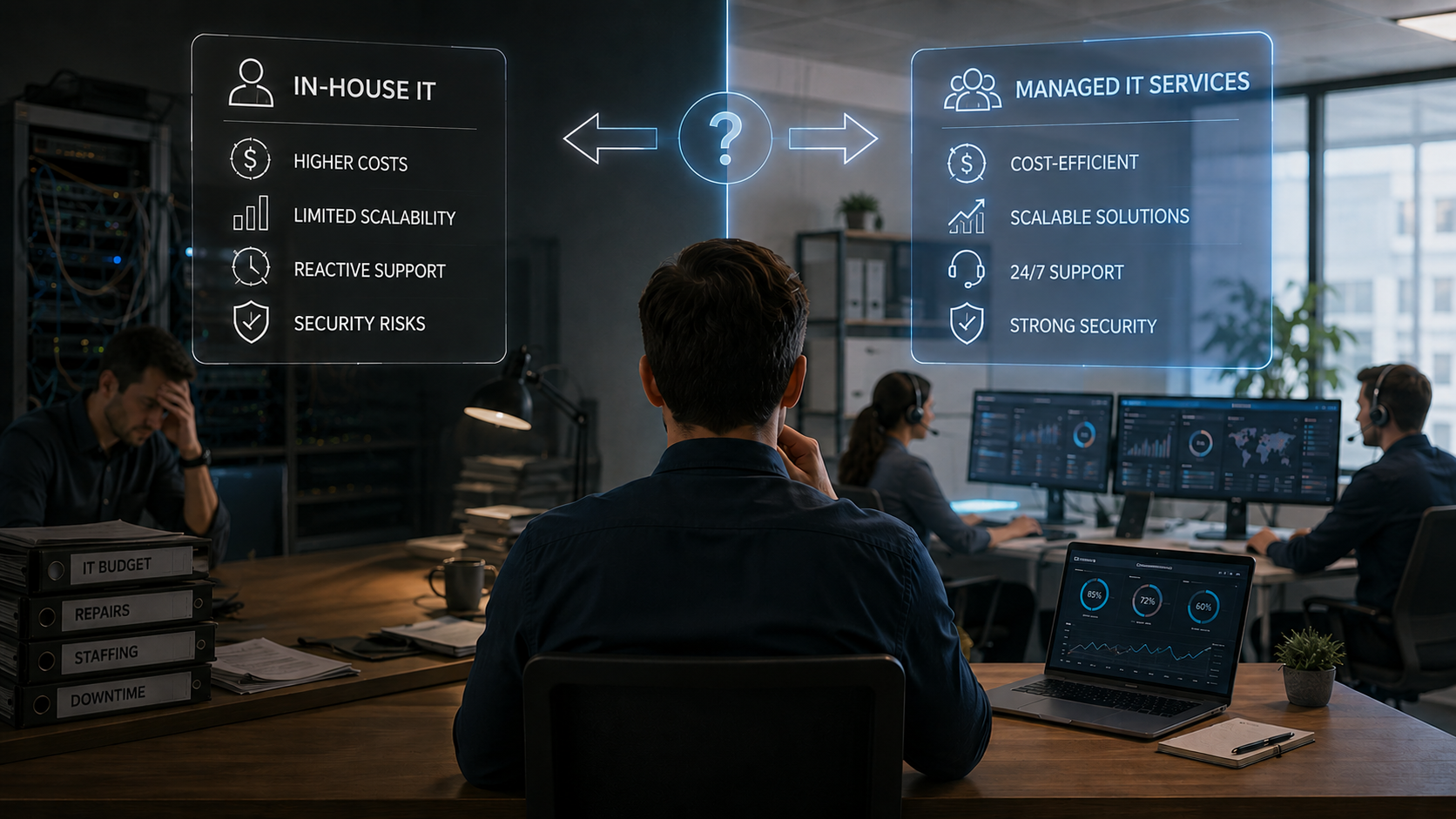
Most serious incidents do not begin at eleven on a Tuesday morning. They begin overnight, on the weekend, or over a holiday break, precisely because that is when nobody is watching. Continuous monitoring exists to close that window.
Monitoring covers two related things. The first is health: disk space, failing drives, services that have stopped, backups that did not complete, hardware reporting errors. These are the mundane failures that become outages if left until someone notices.
The second is security: login attempts from unexpected places, accounts behaving unusually, unauthorised software appearing, and the early patterns that precede ransomware encrypting a file share.
The difference between a contained incident and a serious breach is usually how long the attacker had before anyone noticed. An intrusion caught within minutes might mean one isolated machine. The same intrusion caught after a long weekend can mean the entire network, encrypted files and a disclosure obligation.
Compressing that window is the single most valuable thing monitoring does.
Day to day, the value is quieter. Failing hardware is replaced during scheduled maintenance rather than at nine on a Monday morning. Capacity problems are seen coming. Backup failures are caught the night they happen instead of the day you need a restore. Over a year, that steadily removes the interruptions that cost you time.
Good monitoring is not a dashboard nobody looks at. It should mean a real person responds when an alert matters, you receive a plain summary of what is happening on your systems, and problems are resolved before your staff report them. If you are still finding out about failures from your own team, the monitoring is not doing its job.
Tell us what is getting in the way and we will tell you honestly what we would do about it. Start with a free network assessment, or just call (480) 701-0074 and talk to someone in Mesa who knows what they are looking at.